Tobias Wolff
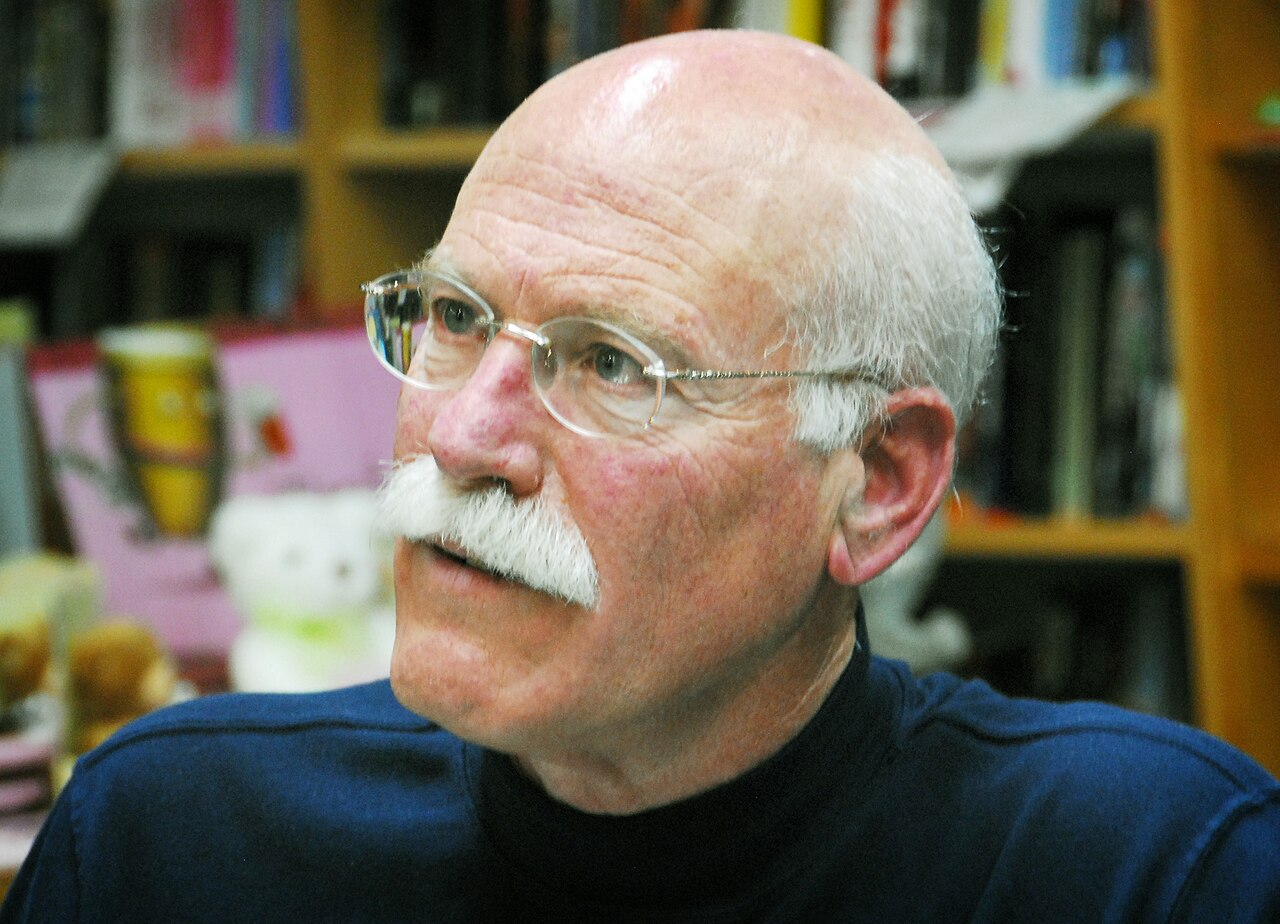
By Mark Coggins from San Francisco - Tobias Wolff, CC BY 2.0
Tobias Wollf's Career
After school, Wolff briefly worked on a ship, and in 1964 volunteered for the army. Four years later, he was discharged. Oxford University came next, followed by stints as a reporter, a waiter, a night watchman, and a high-school teacher. In 1975, he was awarded a Wallace Stegner Fellowship by Stanford University, where he remained as a lecturer for two years. He taught in the creative writing program at Syracuse University from 1980–1997, after which he returned to Stanford, where he now holds the Ward W. and Priscilla B. Woods Professorship in the School of Humanities and Sciences. Widely considered a master of the short form, Wolff is the author of three books of stories: In the Garden of the North American Martyrs (1981); Back in the World (1985); and The Night in Question (1996). A novella, The Barracks Thief (1984), won the pen/Faulkner Award for Fiction; and his two memoirs, This Boy’s Life (1989), which won the Los Angeles Times Book Prize, and In Pharaoh’s Army: Memories of the Lost War (1994), a National Book Award finalist, are hailed as bench- marks of the form.
Tobias Wolff on why writers don't discuss their work
But I have also learned that you can be patient and diligent and sometimes it just doesn’t strike sparks. After a while you begin to understand that writing well is not a promised reward for being virtuous. No, every time you do it you’re stepping off into darkness and hoping for some light. You can be faithful, work hard, not waste your talents in drink, and still not have it happen. That’s what makes writers nervous—the sense of the thing being given, day by day. You might have been writing good stories for years, then for some reason the stories aren’t so good. Anything that seems able to jinx you, to invite trouble, writers avoid. And one of the things that writers very quickly learn to avoid is talking their work away. Talking about your work hardens it prematurely, and weakens the charge. You need to keep a fluid sense of the work in hand—it has to be able to change almost without your being aware that it’s changing.